
ATSC 3.0 Datacasting
Connect and Interact in real-time with virtually zero-latency
ATSC 3.0: The Fastest Form of Mass Communication
ATSC 3.0 offers major advantages over traditional cellular networks for data applications. Its low-band broadcast spectrum travels farther and penetrates buildings better, while its architecture enables more efficient data delivery to users, vehicles, and IoT devices. As an IP-native standard, ATSC 3.0 supports flexible security, modulation, and CODEC options, and delivers consistent, dedicated bitrates 24/7—without congestion or slowdowns.
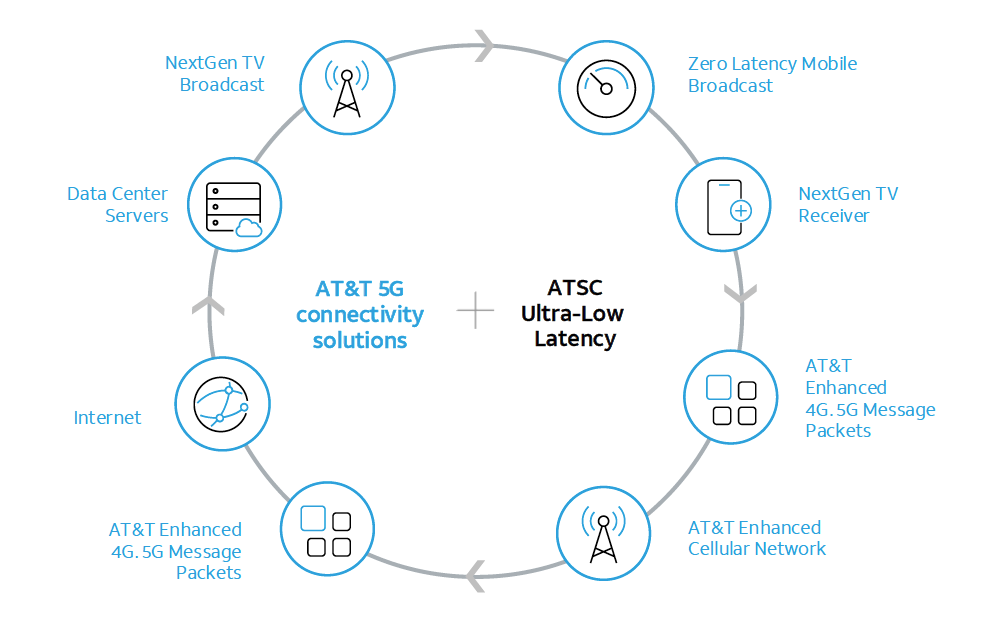
OTA Datacasting and Streaming Enhanced with AT&T
- Enables a low-latency push of information to all devices in a city, region or across the US.
- Optimized message packets are returned over the Cellular Network
- Allows for reliable, time-sensitive communications across regional areas and in congested environments
Stadiums & Venues
Connected stadiums and venues can transform the fan experience by delivering exclusive content, merchandise promotions, artist messages, and special offers directly to attendees’ devices—creating a personalized, interactive environment. Real-time polling, fan voting, and interactive games enhance engagement using instant broadcast capabilities, while tailored event information based on ticket type, seating section, or user preferences ensures relevant updates without overwhelming guests. In addition, the system can deliver real-time emergency alerts across all devices and displays, helping ensure attendee safety and fast response in critical situations.
Connected Cars
Connected cars powered by real-time broadcast technology can receive instant traffic updates, emergency alerts, and critical safety information without relying on cellular networks. This ensures drivers get timely notifications about accidents, road closures, weather hazards, and evacuation routes—even in areas with limited coverage. With consistent, low-latency data delivery, connected vehicles can make smarter routing decisions and enhance passenger safety through always-on awareness.
Connected Displays
Connected displays deliver real-time content across a wide range of environments—from retail stores and corporate campuses to transportation hubs and public venues. With instant access to live video, dynamic messaging, and data-driven updates, these displays keep audiences informed, engaged, and safe. Whether showcasing promotions, broadcasting announcements, or delivering emergency alerts, connected displays ensure consistent, high-impact communication across every screen and location.
Emergency Alerts
Emergency alert broadcasting provides instant, reliable delivery of critical information—ensuring public safety when every second counts. From Amber Alerts and severe weather warnings to evacuation notices and local emergency updates, alerts are transmitted directly to connected devices and displays without relying on cellular networks. This always-on capability ensures consistent coverage, even in areas with limited service or during times of high network congestion, helping communities stay informed and respond quickly in urgent situations.
Use Cases
ATSC 3.0 delivers powerful capabilities that support a wide range of data-driven applications across industries. With its broadcast-based architecture, it enables fast, reliable, and scalable communication—ideal for everything from connected devices and software updates to media services and mobile data delivery.
- Internet of Things
- Software updates
- Ultra-low Latency
- Disaster Recovery
- Mobile Data Broadcast
- Cellular Traffic Offload
- Media services
- Connected Cars